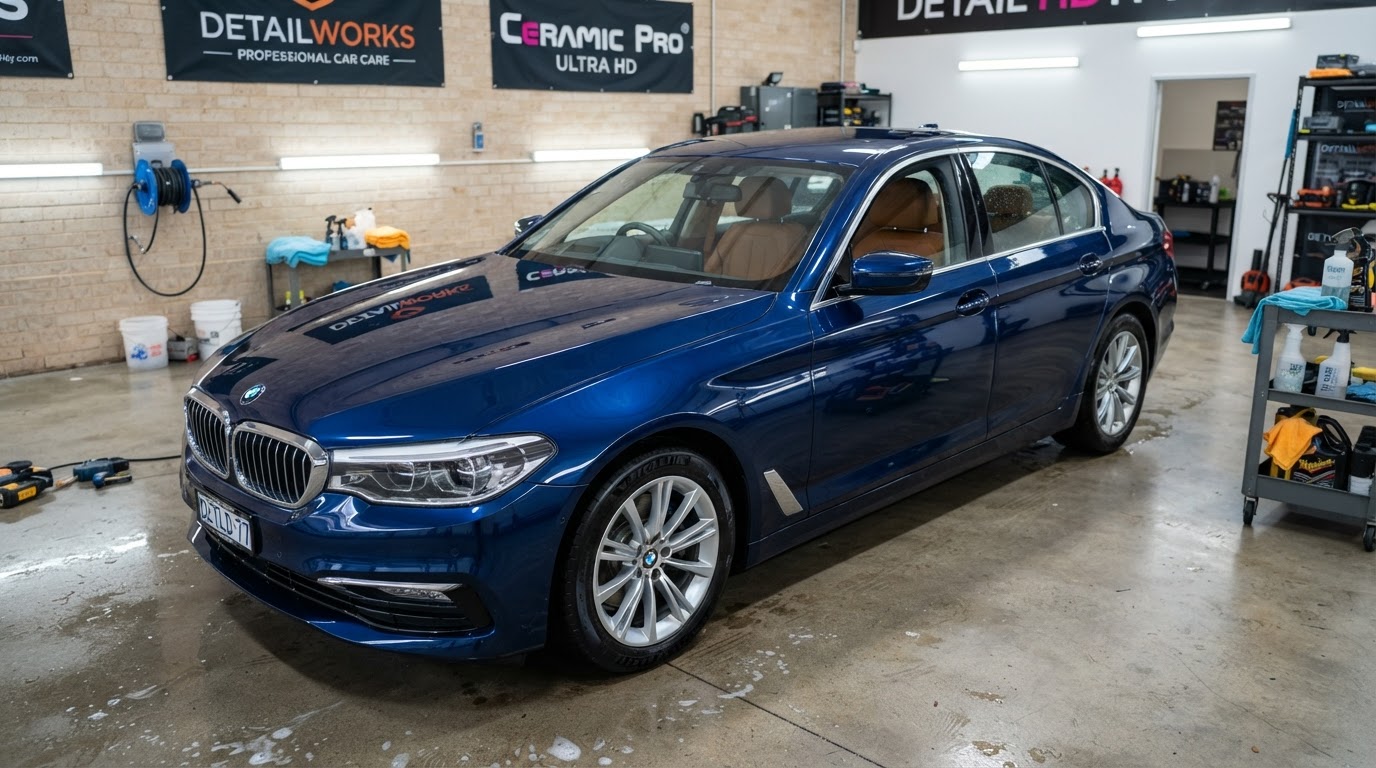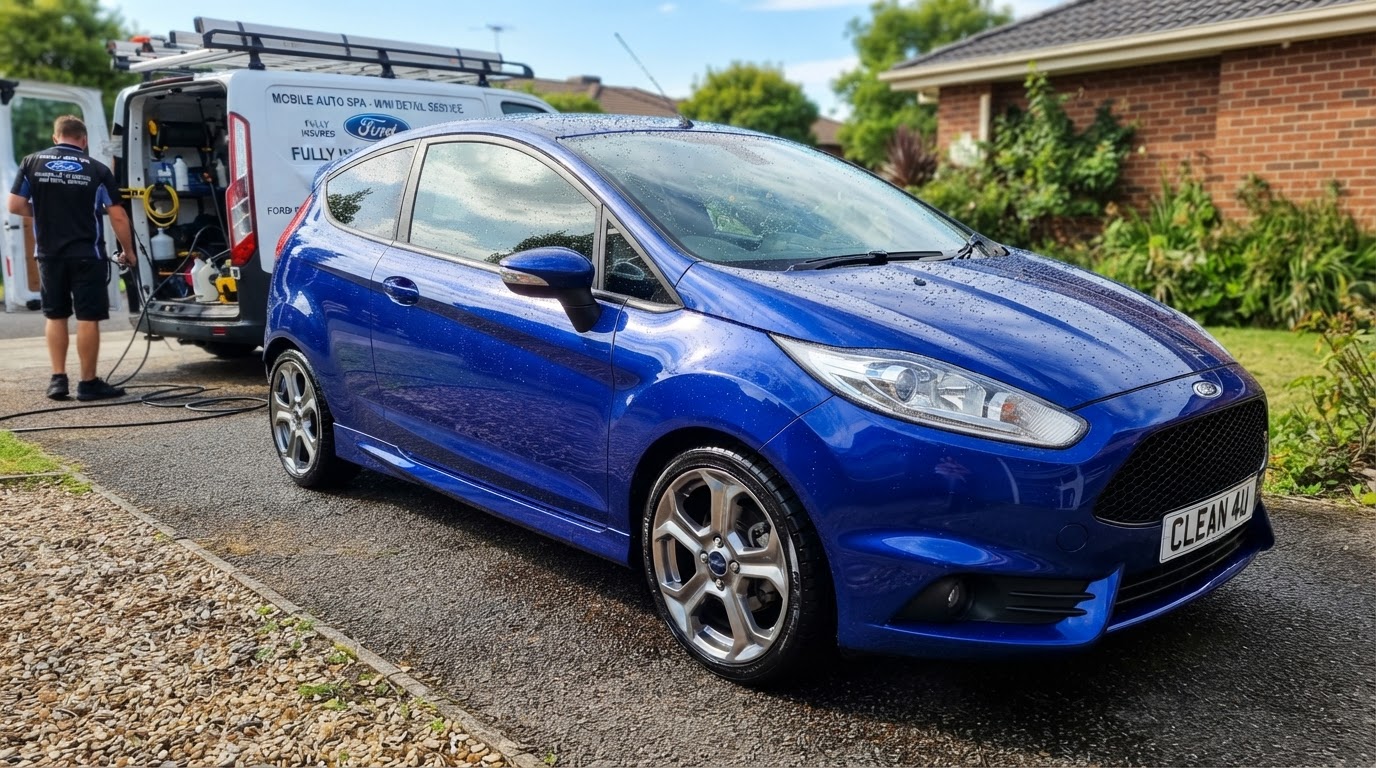
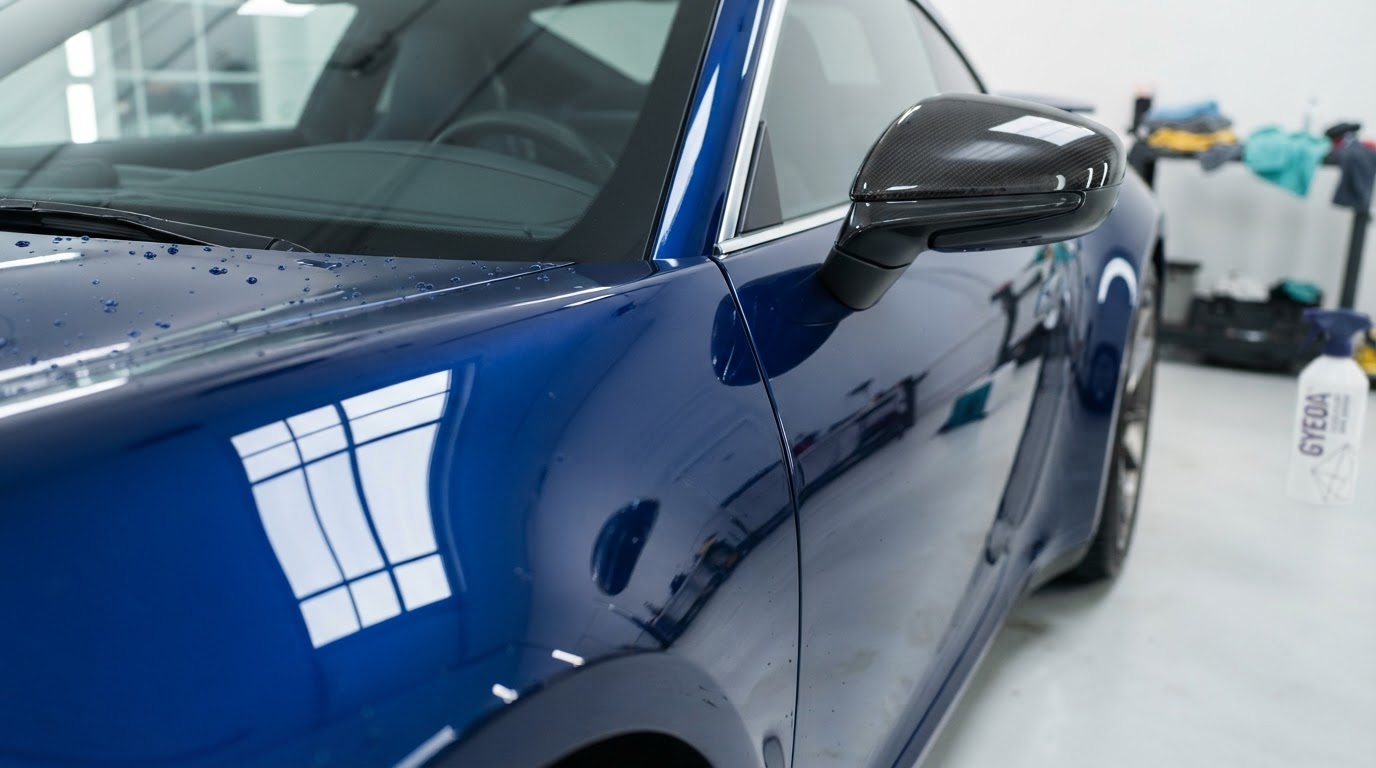
First impressions set the price
When a buyer or valuer walks up to your car, they've formed an opinion within seconds — and it's driven almost entirely by appearance. A clean, well-presented car reads as cared-for and reliable; a dull, dirty one raises questions about everything else you haven't maintained. That snap judgement carries straight through to the offer you receive.
This is why a pre-sale detail consistently returns multiples of its cost. You're not just making the car cleaner — you're shaping the narrative a buyer tells themselves about how the car has been looked after. A showroom-grade presentation says the vehicle has been cared for, and buyers pay for that confidence.
What buyers and valuers notice first
Buyers are drawn to the details that signal care — or neglect. Dull, swirled paint suggests a hard life; glossy, corrected paint suggests the opposite. Cloudy headlights make a car look older than it is; restored, crystal-clear headlights shave years off its appearance at a glance.
Inside, a fresh, clean cabin with no odour is the single most powerful signal. Lingering smell, stained seats or a dull dashboard all drag down perceived value. Clean glass, dressed tyres and tidy door jambs round out the impression. None of it is expensive to fix — but left undone, each one quietly costs you money on the sale.
- Paint gloss and a swirl-free, polished finish
- Crystal-clear, restored headlights
- A fresh, odour-free, deep-cleaned interior
- Streak-free glass and clean, dressed tyres
- Tidy door jambs, sills and boot
What a pre-sale detail should cover
A pre-sale detail targets the areas that most affect buyer perception and valuation. On the exterior, that means a wash and decontamination to lift embedded grime, a paint enhancement to restore gloss and hide age, headlight restoration where needed, and a protective sealant so the car keeps looking its best through the selling period.
Inside, a deep clean and deodorise resets the cabin — vacuum, steam and sanitise, carpet and seat shampoo, leather conditioning and a fresh scent. Glass, wheels and tyres are finished for a crisp presentation, and the engine bay gets a tidy-up. The result is a car that photographs better, inspects better, and commands a stronger offer.
Timing and the return on a pre-sale detail
Timing matters. Have the detail done as close to listing and inspection as practical, so the car is at its best for photos and viewings. A freshly detailed car photographs dramatically better — and those photos are the first thing most buyers see online.
In almost every case, the lift in sale price — or the faster sale at your asking price — far outweighs the cost of the detail. A clean, well-presented car stands out in a crowded market, inspects without awkward questions, and tends to attract serious buyers rather than lowball offers. It's one of the best returns on a few hours' work a seller can make.